
WinterPatch · a division of Asphalt Pro Inc.
Potholes don't wait for spring
Stop paying twice. WinterPatch repairs potholes with hot asphalt and seals cracks with hot-pour rubber all winter, so the damage stops growing now instead of getting worse until the asphalt plants reopen in late May.
Why fix it now
Every freeze–thaw cycle makes it bigger
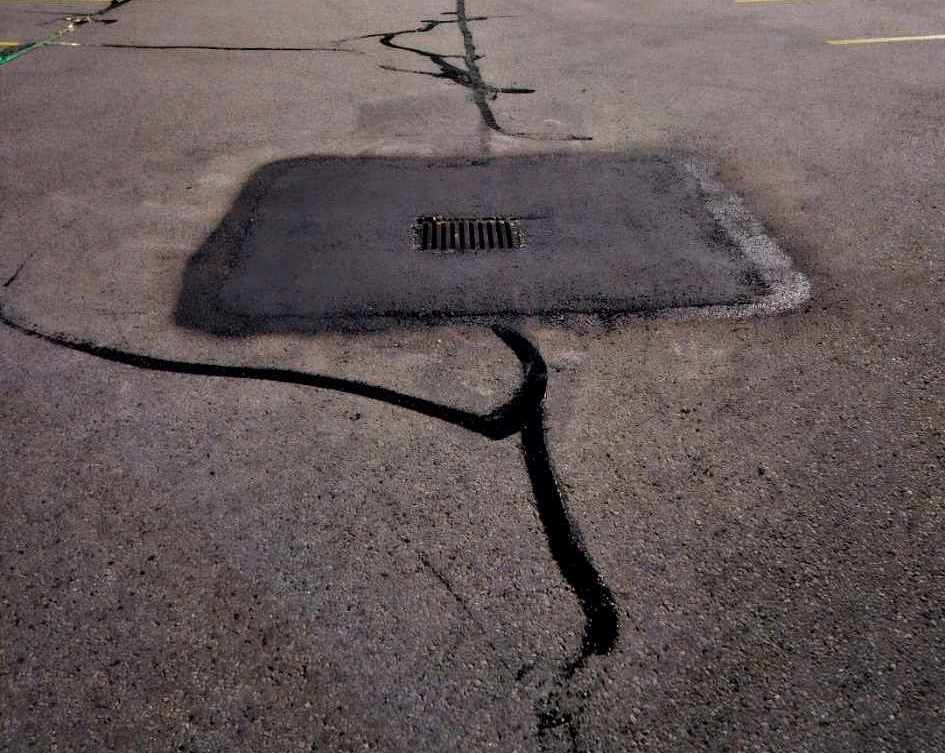
Water runs into a crack or pothole and soaks the base underneath. When it freezes, it expands and pushes the asphalt apart. When it thaws, the water goes deeper, and the next freeze breaks more loose. Plows, delivery trucks and daily traffic finish the job on the weakened edges.
Grande Prairie goes through freeze–thaw swings from fall to spring, so a hole that takes one repair spot in November can need two or three by the time the plants open. Waiting doesn't save the repair. It makes the repair bigger.
An open pothole at an entrance, loading dock or drive-through also stays a trip, fall and tire-damage risk all winter. Fixing it now closes that risk.
Your three choices this winter
Cold patch, wait for spring, or WinterPatch
| Cold patch now | Wait for spring | WinterPatch now | |
|---|---|---|---|
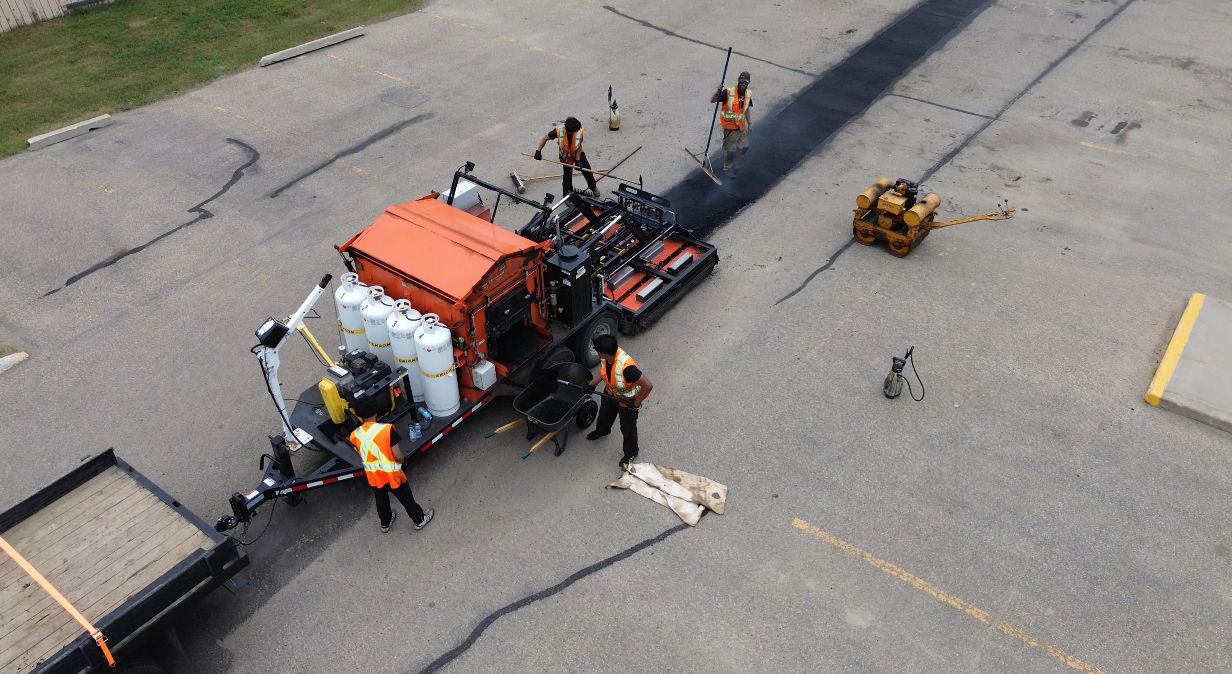
| What it is | Stockpile mix with a chemical binder, pressed into a cold, wet hole | Leave the damage until the asphalt plants reopen in late May | Hot infrared repair: old asphalt heated in place, fresh hot mix and rejuvenator added, compacted as one piece |
| How long it lasts | Temporary. It doesn't bond to the pavement around it, so traffic and water loosen it and it often pops out | Nothing is fixed until spring | Bonded to the surrounding asphalt with no saw cuts and no cold joint for water to get into |
| The hole meanwhile | Keeps taking on water around the loose patch | Grows with every freeze–thaw cycle; the liability stays open all winter | Sealed now, before the spring thaw |
| What you pay | The cold patch now, then the real repair in spring: you pay twice | Spring remove-and-replace on small areas runs $15–$20 per ft², or $675–$900 for the same spot, and the cut square is bigger than the damage | $497 per repair spot booked direct, done once, and checked in spring |
How WinterPatch works
Hot asphalt, in the middle of winter
Mark & quote
We mark every repair spot on site, photograph it and quote by the spot.
Heat in place
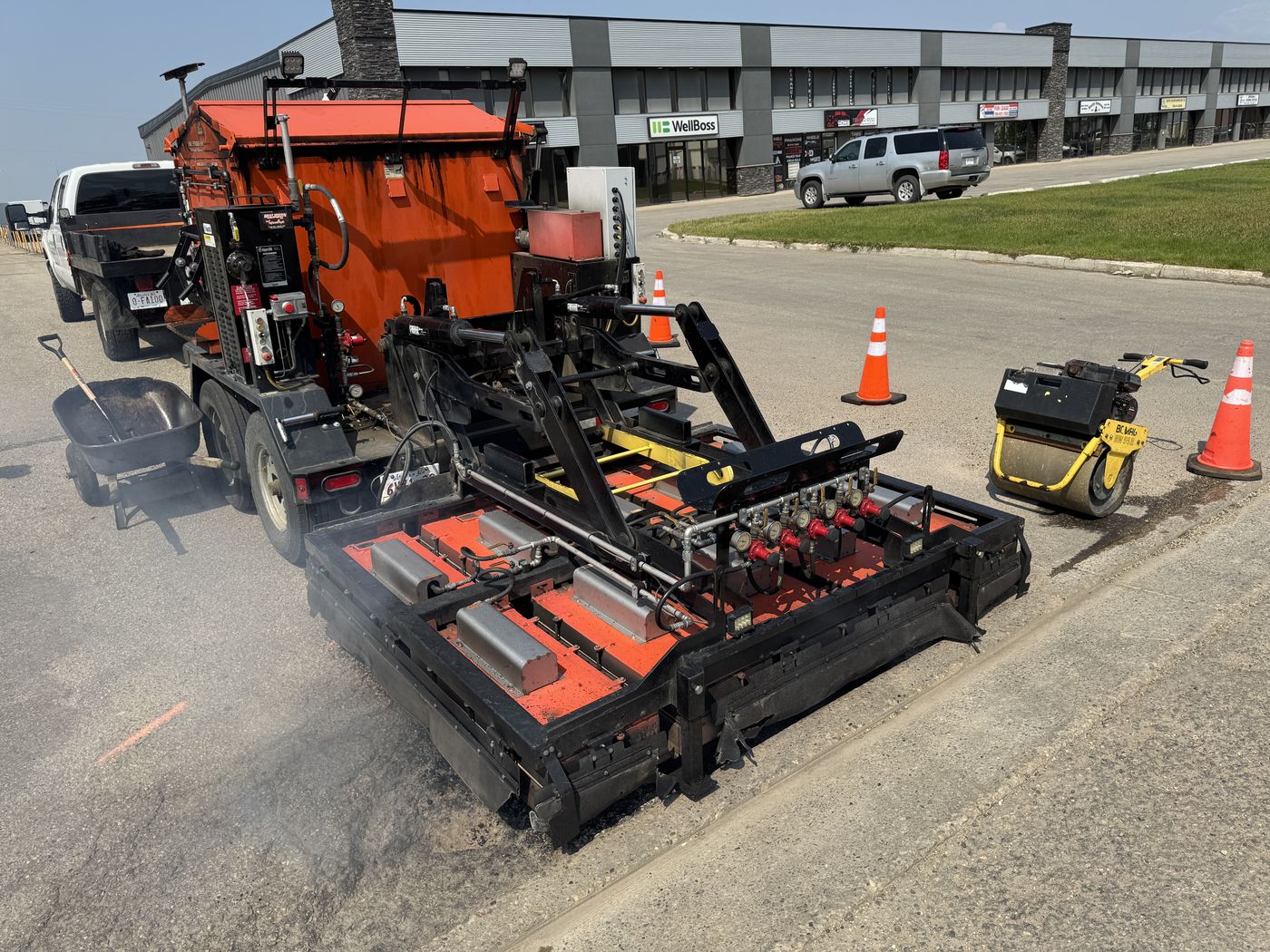
The HDE 750 infrared heater softens the existing asphalt where it sits. No saw cutting, no jackhammers.
Rejuvenate & add mix
Rejuvenator goes into the heated asphalt, then fresh hot mix, kept hot overnight in our 2-ton hot box.
Rake & compact
Old and new asphalt are raked and rolled together while hot, into one bonded repair.
Spring check
Every winter repair is checked in spring.
Works on:
Winter crack sealing
Seal the cracks before the next thaw
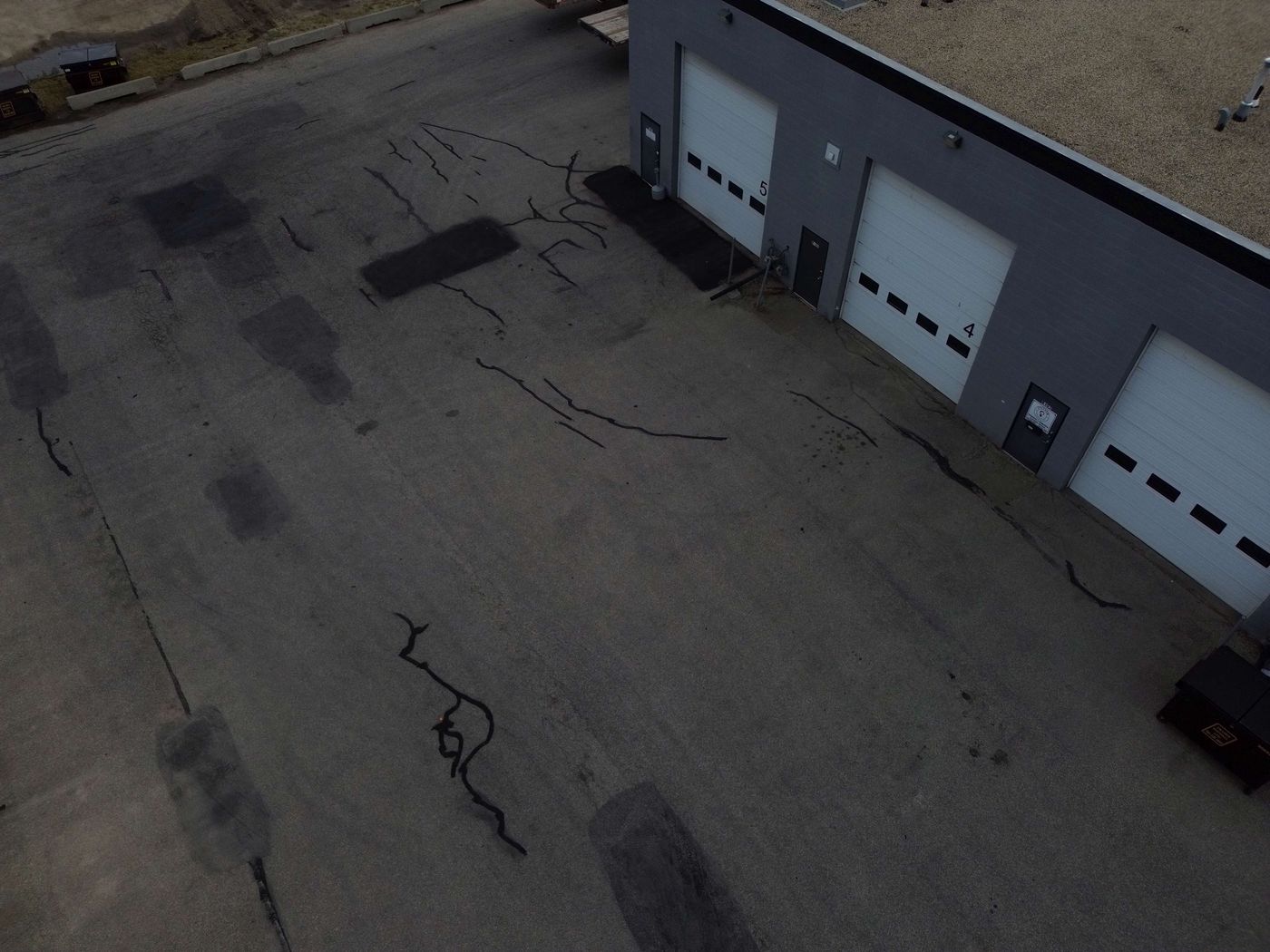
Cracks are how the water gets in. Every crack left open in winter becomes a channel into the base, and the base is what fails and turns into a pothole by spring.
Our Crack Jet blasts dirt, ice, debris and vegetation out of each crack and heats the crack walls with superheated air. Hot-pour MacSeal rubber goes in right behind it and bonds to the warm, dry crack. The rubber stays flexible to −40°C, so it moves with the pavement instead of cracking out.
We seal on days when the cracks are dry and clear of snow, and we schedule around the weather. Cracks wider than about 1 inch get a hot asphalt repair instead.
- Keeps water out of the base through the freeze–thaw season
- Hot-pour rubber, not a cold-pour filler that turns brittle
- Quoted by the measured length of crack
Pricing
Priced by the repair spot
When you book directly with us by phone, text or online. One repair spot is about 45 ft² of pavement heated and repaired. We mark each spot on site, so the quote shows exactly how many spots your lot or driveway needs. Plus GST.
Spring remove-and-replace on small areas runs $15–$20 per ft², or $675–$900 for the same spot.
Book a winter assessment| Commercial minimumAbout three repair spots | $1,497 |
| Residential drivewayScheduled when we're in your area (about 1 spot) | $500 |
| Emergency call-outMinimum per call-out | $1,997 |
Minimums before GST. Crack sealing is quoted by measured length.
Who it's for
Lots that can't wait until May
Property managers and condo boards, plazas and strip malls, gas stations and drive-throughs, clinics, equipment and industrial yards, loading docks, and homeowners with a driveway that's breaking up.
WinterPatch is the winter division of Asphalt Pro Inc., the same crew and equipment that maintain lots across Grande Prairie and the Peace Region the rest of the year.
Book a winter assessment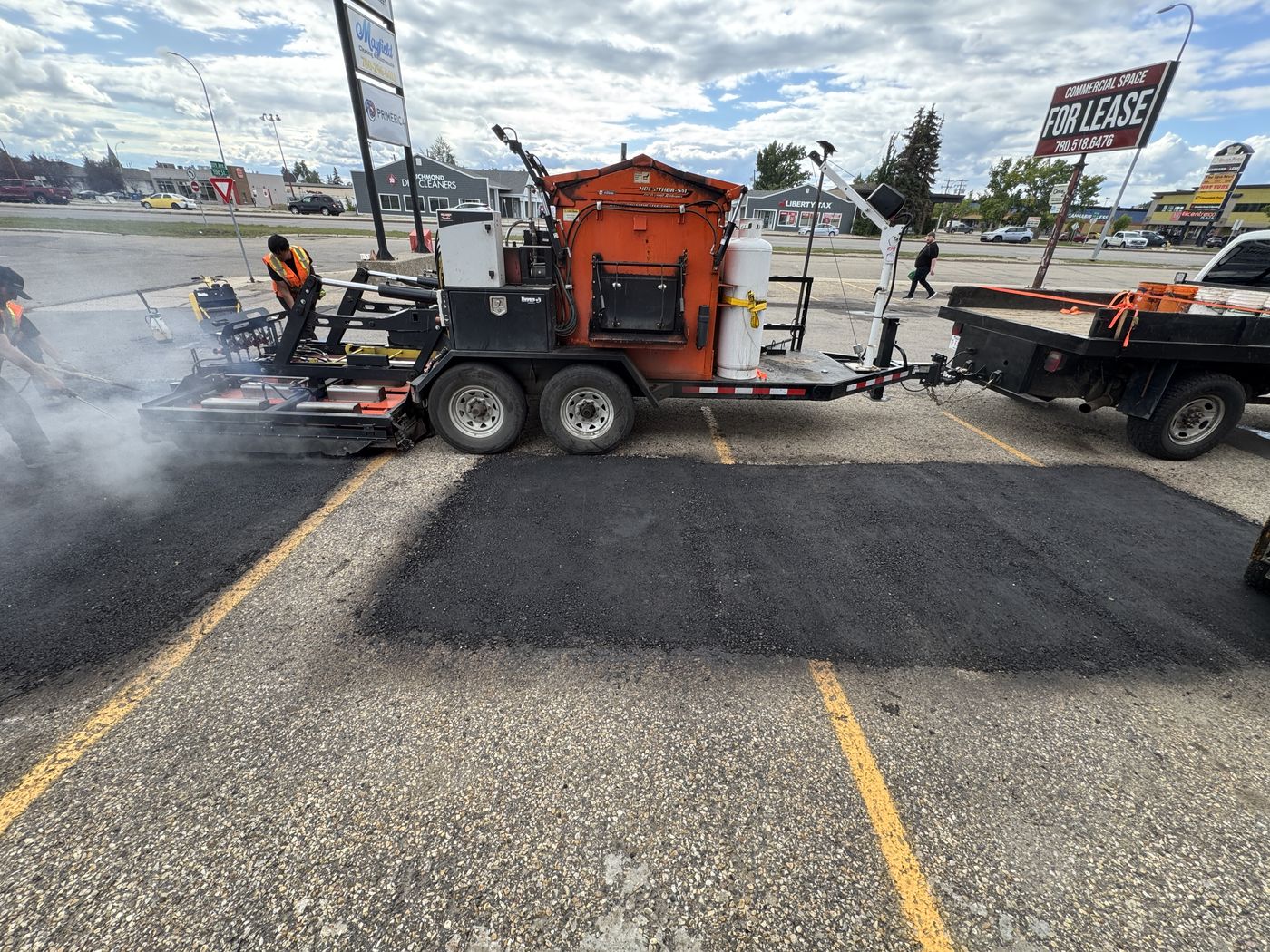
FAQ
WinterPatch questions
Can asphalt really be repaired in winter?
Yes. We don't pave in winter; we repair. The HDE 750 heats the existing asphalt in place, and the fresh hot mix is kept hot overnight in our insulated 2-ton hot box, so it goes in hot even when the plants are closed.
Is this the same as cold patch?
No. Cold patch is a stockpile mix held together with a chemical binder and pressed into a cold, wet hole. It doesn't bond to the pavement around it, so traffic and water loosen it. WinterPatch heats the old asphalt and the new mix together and compacts them as one repair, with no saw cuts and no cold joint.
What about snow and ice on the lot?
The repair area needs to be cleared. We clear the spot and the heater dries it before the repair. Storm days are rescheduled.
How cold is too cold?
We work normally down to −15°C. Between −15°C and −20°C we take emergency repairs only, and we don't work below −20°C.
Do you check the repairs?
Yes. Every winter repair is checked in spring.
Is my driveway too small?
No. Residential repairs have a $500 minimum when we schedule them on a day we're already working in your area.
Stop paying twice
Text us photos of the potholes and cracks, or book a free winter assessment. We'll mark every spot and send a written quote.